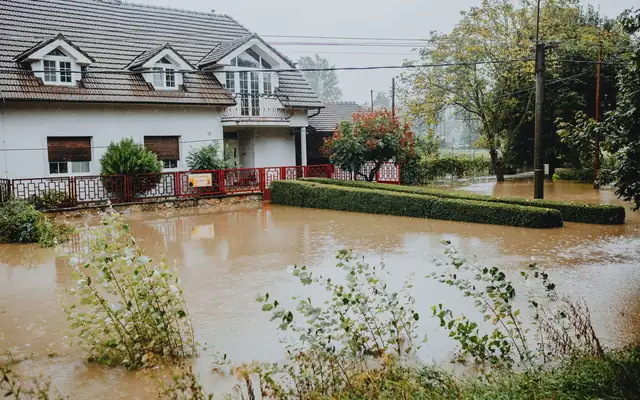
Why floodwater is different
A pipe leak usually starts as clean water. Floodwater does not. It moves across streets, yards and drains before it enters a home, and it can carry sewage, chemicals and debris. Restoration professionals therefore treat flood intrusion as contaminated, which changes what can be cleaned and what must be thrown away.
Read clean, gray or black water for the three categories.
Safe first steps
- Do not enter until the area is safe, including checking for structural damage and gas smells.
- Treat all electrical equipment in water as live. See Duke Energy’s guidance.
- Wear waterproof boots, gloves and eye protection if you must enter.
- Photograph and video everything before moving or discarding items.
- Keep children and pets out of the affected area.
What usually gets thrown away
Porous materials that sat in floodwater are often removed rather than cleaned: carpet and padding, insulation, upholstered furniture, mattresses, and drywall that wicked water. Hard, non-porous surfaces can often be cleaned and disinfected. Your restoration provider and your insurance adjuster will both want to see what was removed, so photograph first.
Flood insurance is a separate policy
FEMA states that most homeowners insurance does not cover flood damage. Flood coverage is usually a separate policy, either through the National Flood Insurance Program (FloodSmart.gov) or a private insurer. FEMA says a flood insurance policy generally takes effect 30 days after purchase, so buying one when a storm is already forecast is too late. Ask your agent for the exact terms.
Flood vs. storm damage
If water came in from outside at ground level, it is usually a flood issue. If wind-driven rain came through a roof or window, it is a storm damage issue. Insurance can treat the two very differently, so describe what happened as accurately as you can and take photos showing where the water entered.
Time and cost
Cleanup cost and duration depend on how high the water rose, how long it stayed, what materials were affected and whether it was contaminated. Ask for an itemized written estimate after an inspection, and see what affects the cost of water damage restoration.