Safety before cleanup
Standing water in a building raises three separate risks. Deal with them in this order.
- Electricity. Water and power do not mix. If water has reached outlets, cords, appliances or the electrical panel, do not walk into it. If you can reach the main breaker without stepping in water, switch it off. If you cannot, leave it and call your electric utility or a licensed electrician. Utilities publish guidance on this, for example Duke Energy’s flooding and electrical safety page.
- Contamination. Water from a sewer, a toilet overflow or an outside flood can carry bacteria. Read clean, gray or black water before you touch anything.
- Weight and structure. Saturated drywall and ceilings are heavy. A bulging or sagging ceiling can collapse. Keep people and pets out of that room.
What extraction involves
- Pumps move large volumes of standing water.
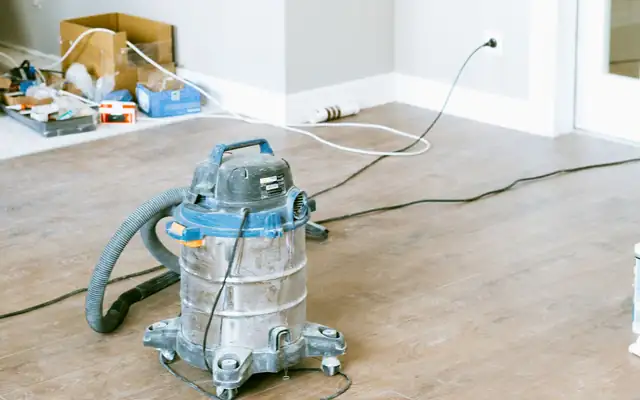
- Wet vacuums and truck-mounted or portable extractors remove water from floors and carpet.
- Extraction wands pull water out of carpet and padding without lifting everything.
- Moisture meters show what is still wet after the visible water is gone. Damp structure behind the visible water is the reason extraction is never the end of the job.
What happens next
When the surface water is out, the focus moves to the moisture trapped in walls, subfloors and cabinets. That is structural drying. Skipping it is a common reason mold appears weeks later.
Time and cost: what changes the answer
- How much water, and how many rooms.
- Whether the water was clean, gray or black.
- Flooring type. Tile dries differently from carpet over padding or engineered wood.
- How long the water has been there.
- How easily crews can reach the affected areas.
Our guide to what affects water damage restoration cost explains how to compare written estimates.
Pricing depends on the job, so ask for a written estimate after an inspection.
When to call a professional straight away
Call a licensed restoration company if the water is more than a thin film, has touched electrical equipment, may be contaminated, or has soaked into walls or ceilings.