Leave now if you notice any of these
- A gas smell. Leave, do not use switches or phones inside, and call your gas company or 911 from outside.
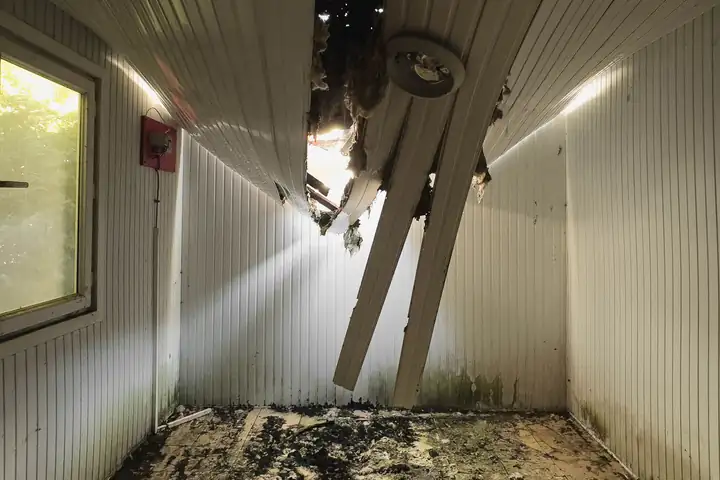
- A sagging, bulging or dripping ceiling. Water-loaded drywall can fall without warning.
- Standing water near outlets, appliances or the electrical panel.
- Sewage or floodwater in the home.
- Burning smells or sparks from wet wiring.
The four hazards, one by one
1. Electrical
Electric current passes easily through water. Utilities advise against touching breakers or fuses while standing on a wet surface, and note that power cannot be reconnected after flooding until a licensed electrician has inspected the system (Duke Energy). If you cannot switch power off safely, stay out and call the utility.
2. Structural
Wet ceilings, soaked insulation and saturated floors can fail. Keep out of any room with a bulging ceiling, and do not go into an attic with wet insulation unless a professional says it is safe.
3. Contamination
Water from toilets, sewers or outdoor flooding can carry harmful organisms. Do not wade in it, and keep children, older adults and pets away. Read clean, gray or black water.
4. Mold and air quality
Mold can start if materials stay wet. The U.S. EPA advises drying within 24 to 48 hours. People with asthma or allergies may react sooner. If the home smells musty, consider staying elsewhere while it dries.
If you can stay
- Stay out of the wet rooms and keep them closed.
- Keep power off in wet areas until it is checked.
- Wear gloves and closed shoes when handling wet items.
- Ventilate if the weather allows, and run the AC if it is safe to do so.
If you cannot stay
Keep your receipts for lodging and necessary expenses, and ask your insurer whether your policy has additional living expense coverage. See the insurance guide.