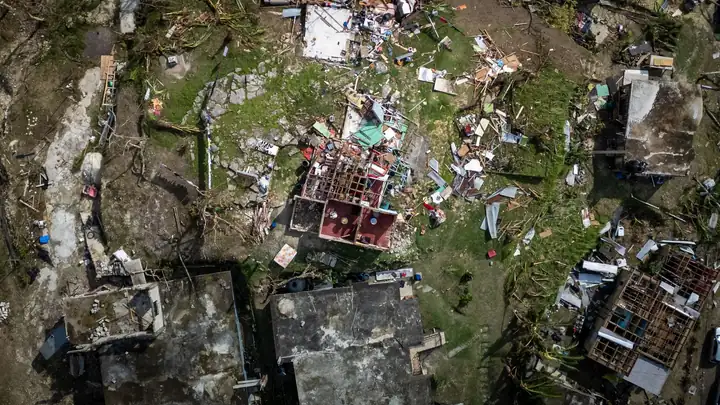
Before you start: is it safe?
Check for downed power lines, gas smells and damaged structure. Do not go into floodwater, which may be contaminated and may hide live electrical hazards. If the power is out, treat every wire as live.
The checklist, from the outside in
Roof and outside
- Missing or lifted shingles or tiles.
- Damaged flashing around vents, skylights and chimneys.
- Broken windows, damaged screens, torn door seals.
- Fallen limbs or debris that may have punched through the roof.
- Gutters and downspouts that are blocked or detached.
Attic
- Wet or compressed insulation.
- Daylight where there should be none.
- Dark stains on rafters or decking.
- Go in only if it is safe. A wet attic floor may not hold weight.
Ceilings and walls
- Brown stains, bulges, drips or sagging.
- Bubbling paint, wet baseboards, damp wall bottoms below windows.
Floors
- Wet carpet, cupped hardwood, lifted laminate.
- Water lines on walls, which indicate water from the ground up.
Document before you repair
Take wide and close-up photos and video of every opening and wet area, with timestamps. Photograph temporary repairs as well, and keep receipts. The insurance guide lists what to keep.
Limit further damage
- Cover openings with a temporary tarp or board; for roof work, consider a licensed roofer.
- Move belongings from wet areas.
- Run the AC and dehumidifier if power is on and it is safe.
Dry quickly
The U.S. EPA advises drying within 24 to 48 hours. Wet insulation and drywall from a roof leak often need removal or professional drying. See structural drying.
Know which kind of water you have
Water from above (roof, windows) is usually handled under a different cause of loss than water that rose from the ground. FEMA states that most homeowners insurance does not cover flood damage. See flood damage cleanup if water rose into the house.